Budget-Friendly Ways to Visit a Safari Park without a guide.
By Cherry Lam - 8/6/2025
You probably thought that a safari park costs a fortune to visit right? And you have to get everything arranged and booked for you, and what, that's gotta be like at least 10k per person? Tbh, I just wanted to go to south africa cause I have always been fascinated to visit the country that had an interesting (may i say) history? As I met the many south afrikaans when I travel, I have always wanted to see the country myself. And if I could find a q-suite lay flat way to do it, WTF not?
If you want to see how you can experience the safari park, drive around the park on your own schedule and see the Big-five in the span of a few days, and to be able to book everything in the comfort of your own home for say <$150 per person per day, then read on.
You can even make this the middle stop on your South African trip between the wine sipping destinations (Cape Town, Stellenbosch, etc.) to the colorful, historically vibrant Joburg!
So What and Where is Kruger?
South Africa, as one can imagine, has many renowned safari parks and private game reserves. The Kruger National Park is one that’s managed by the country’s own governing body, SANS Parks. Its vast sanctuary and accessibility to various different kinds of wildlife, not just the Big-Five, but birds, vegetation, biodiversity, etc, is world-renowned and exceptional for wildlife viewing. And since it’s a “public” and not a private reserve, you can imagine how much more affordable visiting this park would be.
How do you to get there?
There are technically three airports that can get you close or into Kruger park without hiring a private jet or a charter: Kruger Mpumalanga (MQP), Skukuza (SZK) and Hoedspruit (HDS). They all have direct flights ranging from 1 - 3 hours from Joburg and Cape Town.
Hoedspruit is in the furthest north that is right on the west side of the park. It could be an alternative if you’ve changed your mind and opt to stay at one of the nearby private reserves. You can enter the park through the closest gate - Orpen with a number of park lodge options including: Bateleur Bushveld Camp, Orpen Rest, Tamboti Satellite Camp, etc.
Mpumalanga is in the furthest south of the park, about an hour from the Malelane Entrance Gate. Several camps that are in the vicinity include: Berg-en-Dal Rest Camp and the popular Crocodile Bridge Rest Camp.
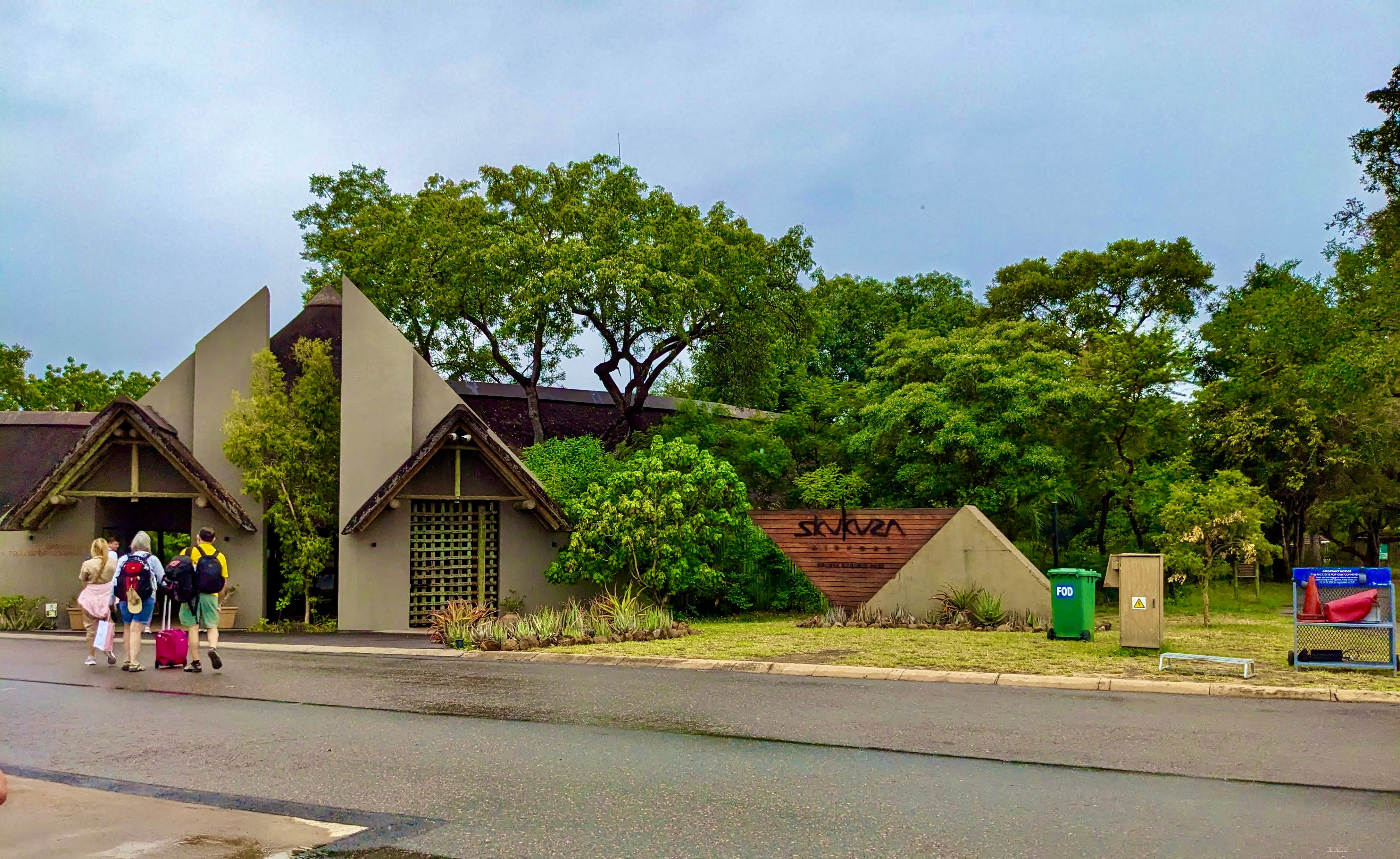
Skukuza is the one I picked, which is the only airport that is literally inside the Safari Park. This is also my halfway stop in my trip where I took a direct flight from Cape Town and then flew directly to Johannesburg after the trip. Since it’s already in the park, I don't have to deal with driving through the gates and paying attention to the gate hours, something to think about when you are choosing the airport. This is also the airport that is closest to the biggest rest camp in the park, Skukuza, and the very popular Lower Sabie Camp (where I ended up), next to a perennial river.
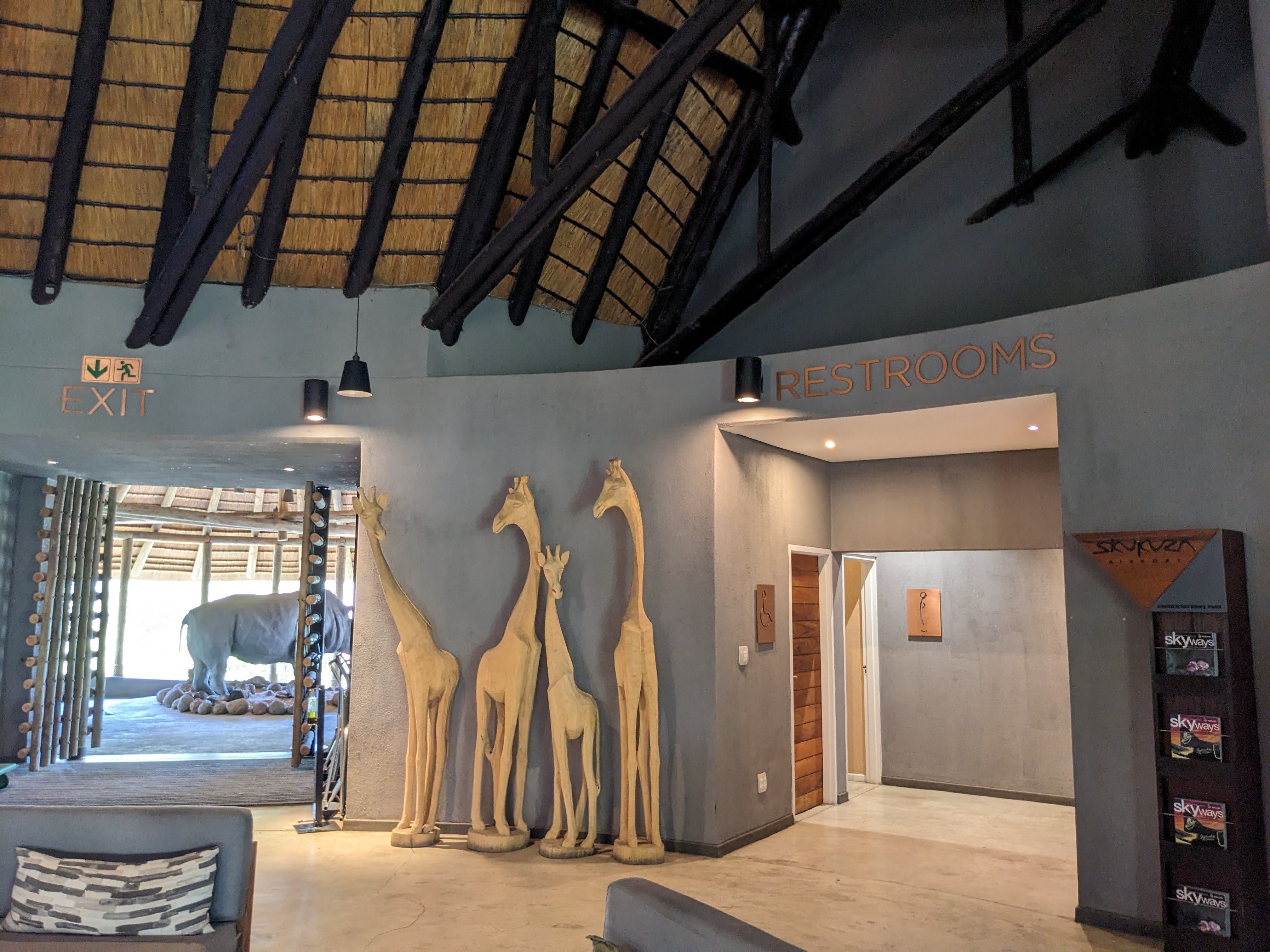
Skukuza is a small airport and it works well because you can deal with the park conversation fees as soon as you land without queuing at the gate, lounge in the safari gazebo with access to car rental, travel agency, cafe, etc.
Where to stay in Kruger?
There are a number of options to pick if you land in Skukuza including Skukuza itself, which has a well appointed luxury hotel if that’s more up your alley. Economical lounges wise, there are two popular camps, Crocodile Bridge and Lower Sabie.
We picked Lower Sabie because of its proximity to the Sabie River for higher chances of game viewing(more about that later). Within each rest area, there are options ranging from simple huts, bungalows, cottages and guest houses. These can accommodate from one to up to seven people per dwelling. There are also campsite areas where you can pitch a tent and use the communal kitchen and bathrooms. Parking is readily available either right next to the dwelling or in a general parking area near the entrance area. One can view and book all these options directly on the SANs park website with photos, amenities, prices, availability, etc.
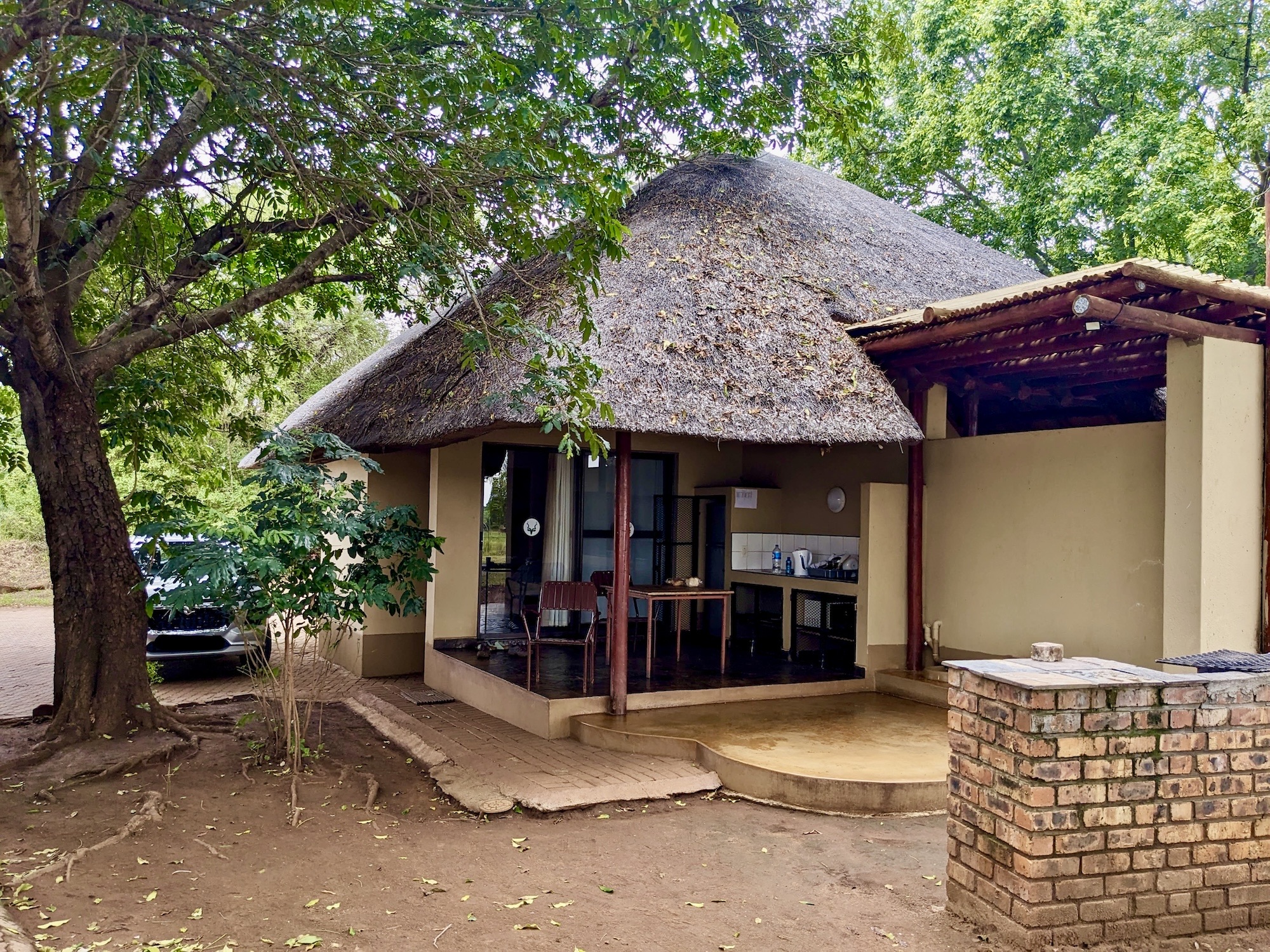
We stayed at one of these bungalows for about ~2000ZAR per night (which is about $110) for double occupancy. The bungalow came with decent air-conditioning, simple and functional WC and shower, a kitchenette and seating area on the veranda. The kitchenette has a good selection of pots and pans, cooking and eating utensils, mugs, etc., with a fridge, a kettle and even a microwave locked behind a cage to prevent theft (Monkeys!). There is even a braai outside where you can barbecue! On this trip, we met some lodge neighbors who brought their own Nespresso machine and some even shared their "crocodile wors" (farmed crocodile sausages) with us!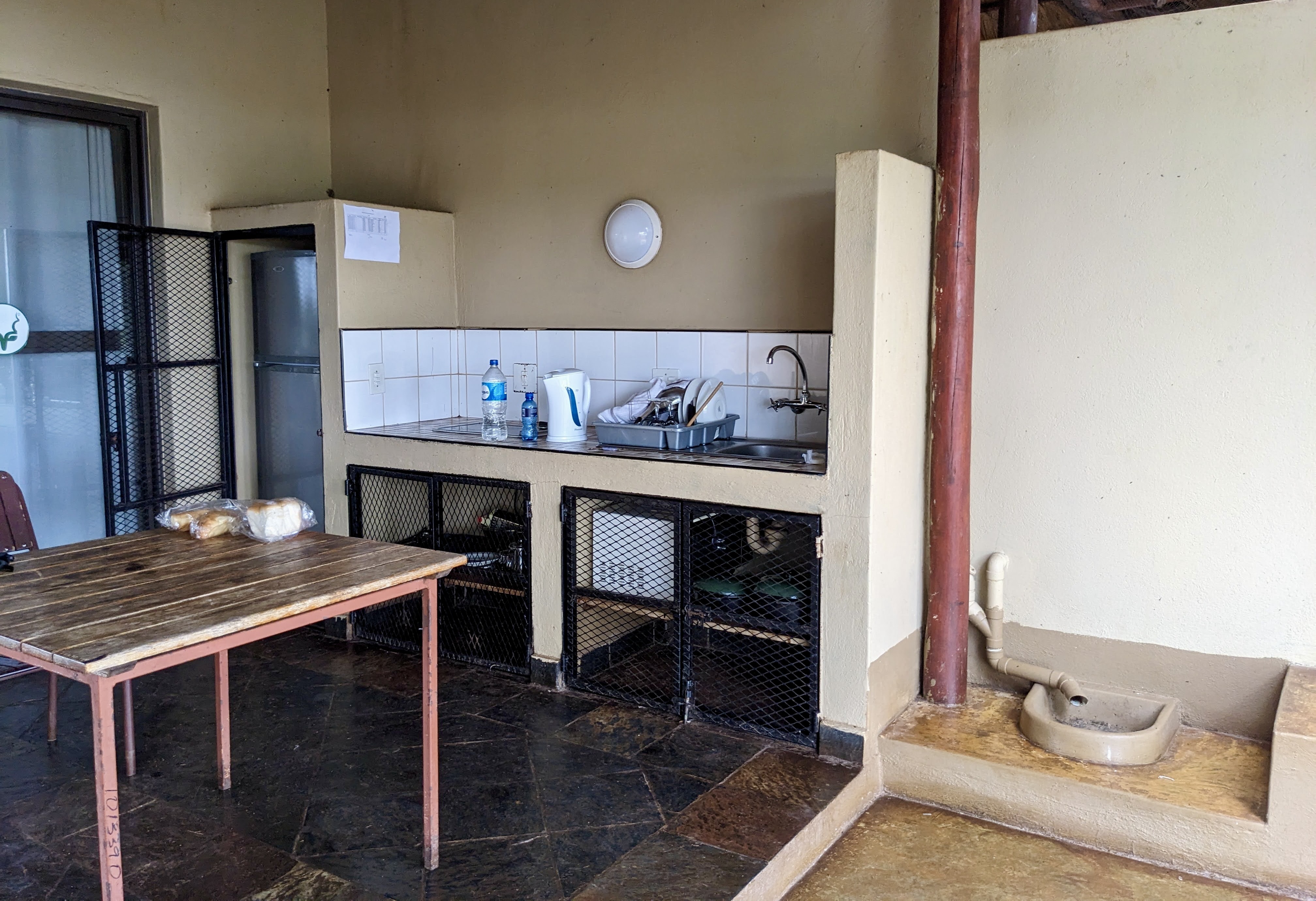
What about food, and drinks?
Within some of the bigger camps, there will be a restaurant and a cafe that serves breakfast, lunches and dinners (even alcohol) during the general business hours. If you are too tired from the safari drive or didn't pack enough cup noodles with you, the food items are priced around $10 - $15, typical yet reasonable prices for tourists. It also provides a good view on the river bank and you might catch some hippos along with your meal!
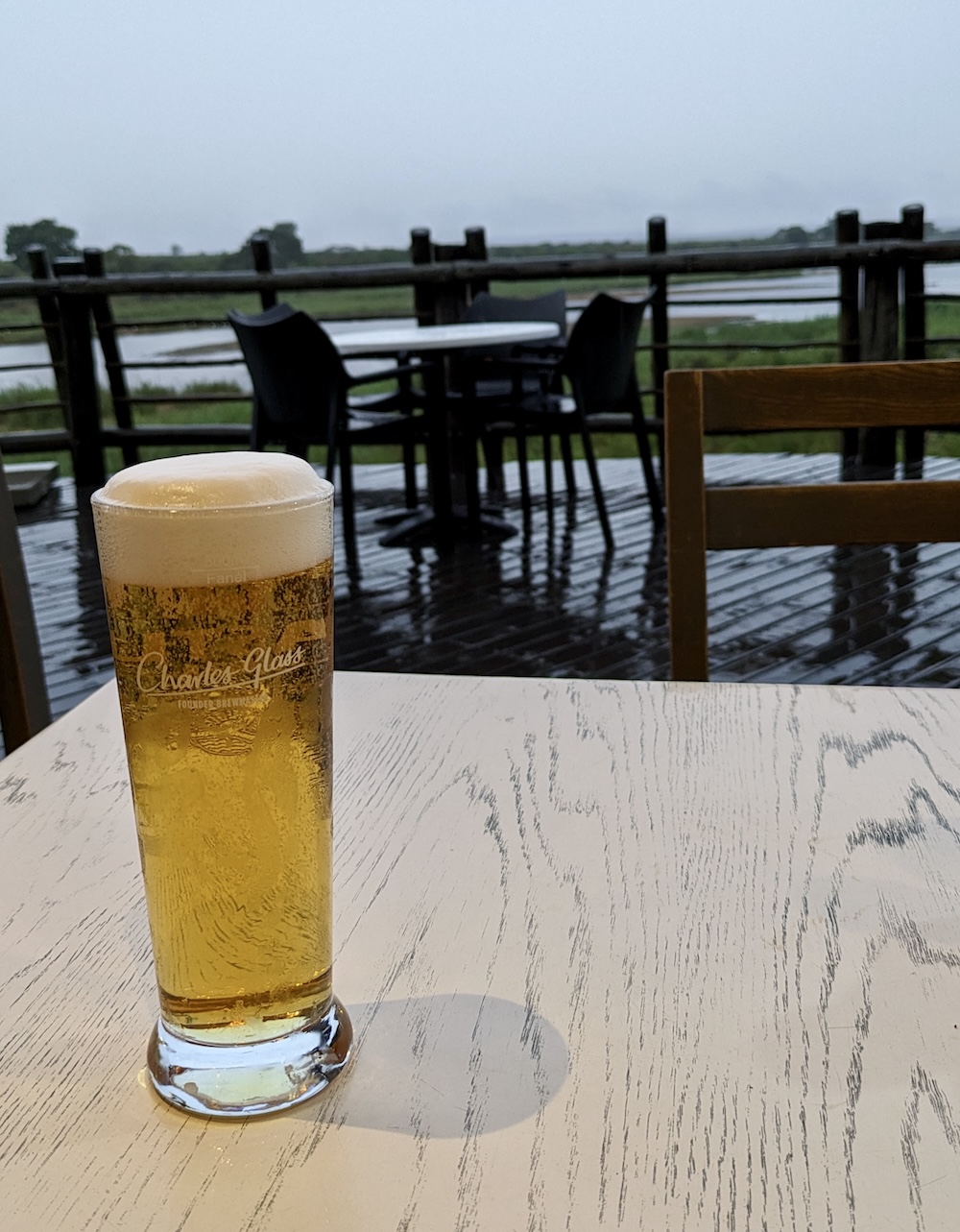
For Lower Sabie, we were able to buy cooking ingredients like bread, butter, milk, eggs, basic vegetables and different options of frozen meats, sausages to cook. They even have maggi noodles if you are so very culinary challenged. There were even bottles of wines and beers available for purchases. There are no limitations on what food or beverages you can buy and bring into the park other than wild-animal derived products. We stopped by a small grocery store before flying into Skukuza and brought with us some packs of instant noodles, wines and snacks. Those small containers of jams, salt and pepper packs from our plane rides were also very handy on this trip.
What to do in the Safari?
We were cheap and had only reserved a sedan from Avis at Skukuza since the majority of the roads inside the safari park are paved and well maintained. We got an upgrade to a Suzuki Grand Vitara (all-wheel drive) likely due to my status that was granted via having the Amex Plat card (link?) which definitely helped when we ventured out to some unpaved and smaller off-roads. I would recommend getting a slightly sturdier car if that’s within your budget. The original sedan reservation for 4 days was around $40 a day.
After retrieving the rental car, we drove straight to the Sabie camp and checked-in, they were able to pull up the reservation on the system and gave us the keys right away.
Game drives:
There are three main routes you can take and do your own game-drive, going North on Tshokwane-Lower Sabie road (H10), going South on Gomondwane Rd (H4-2) and going west on Skukuza - Lower Sabie Rd (H4 -1). If your vehicle allows, you can also do the Mativuhlungu Loop on S82 or the S28 between Crocodile Bridge and Lower Sabie. You should have plenty of time to do all the drives if you are staying here at least 3+ nights. The tip to catch the big-5s tho is….
Follow the other cars.
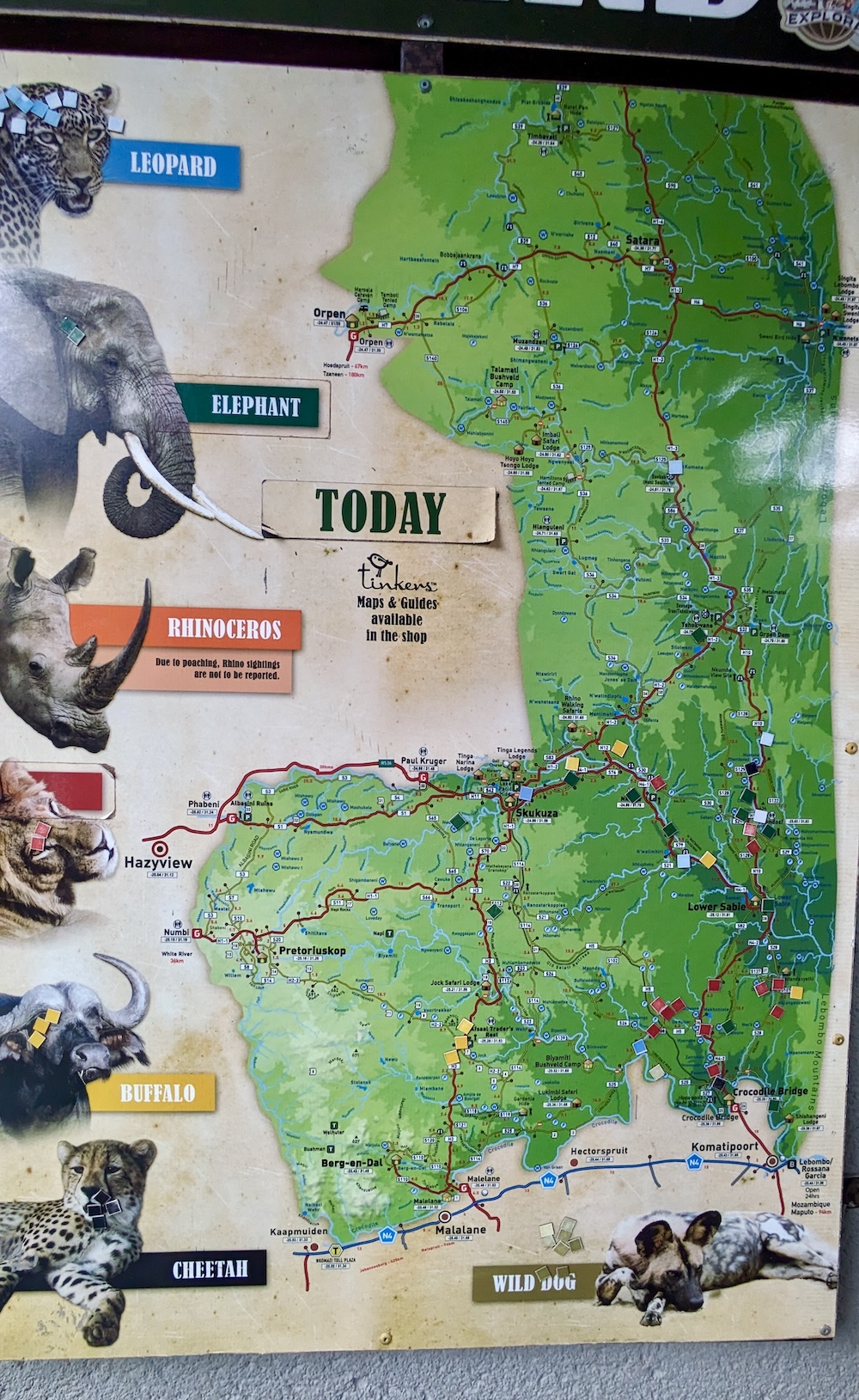
Not only can you see the map here at your rest site for daily sightings, if you start seeing cars hanging around or camping at a certain area, it’s very likely that there is something to see there. Another good site to camp out is….
A water source!
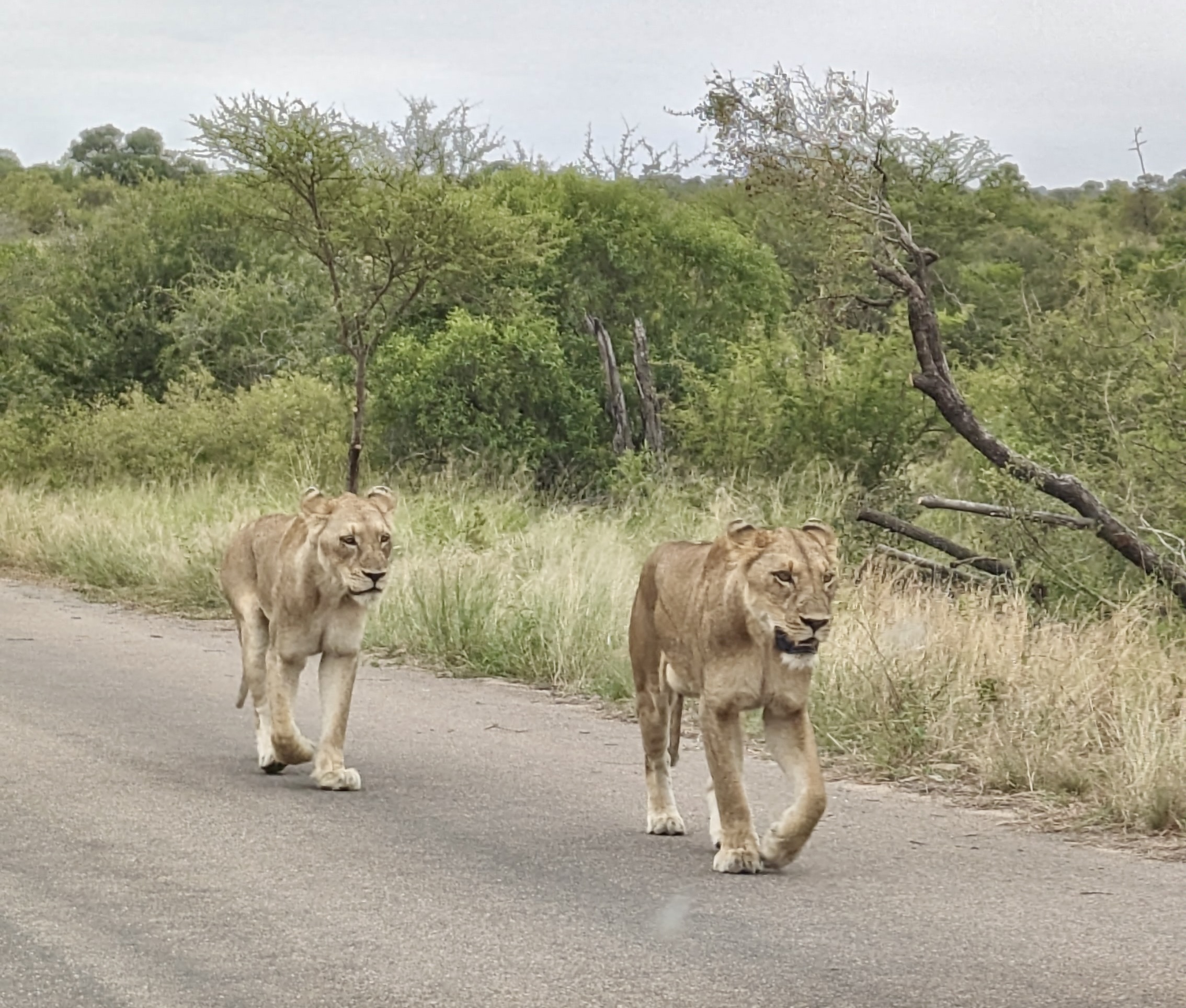
This is where you can catch not only semiaquatic or amphibious animals like hippos, crocodiles, etc. You can also catch animals who are doing their water run, buffalos, elephants, kudus, etc. Bring your binoculars with you, park your car for a brief moment and see what you can catch! It was never busy in March when I went and even though it was the tail end of summer (more lush greenery but lower potential for wildlife spotting), we never ran out of things to see and saw lions on two different days on the scenic drive.
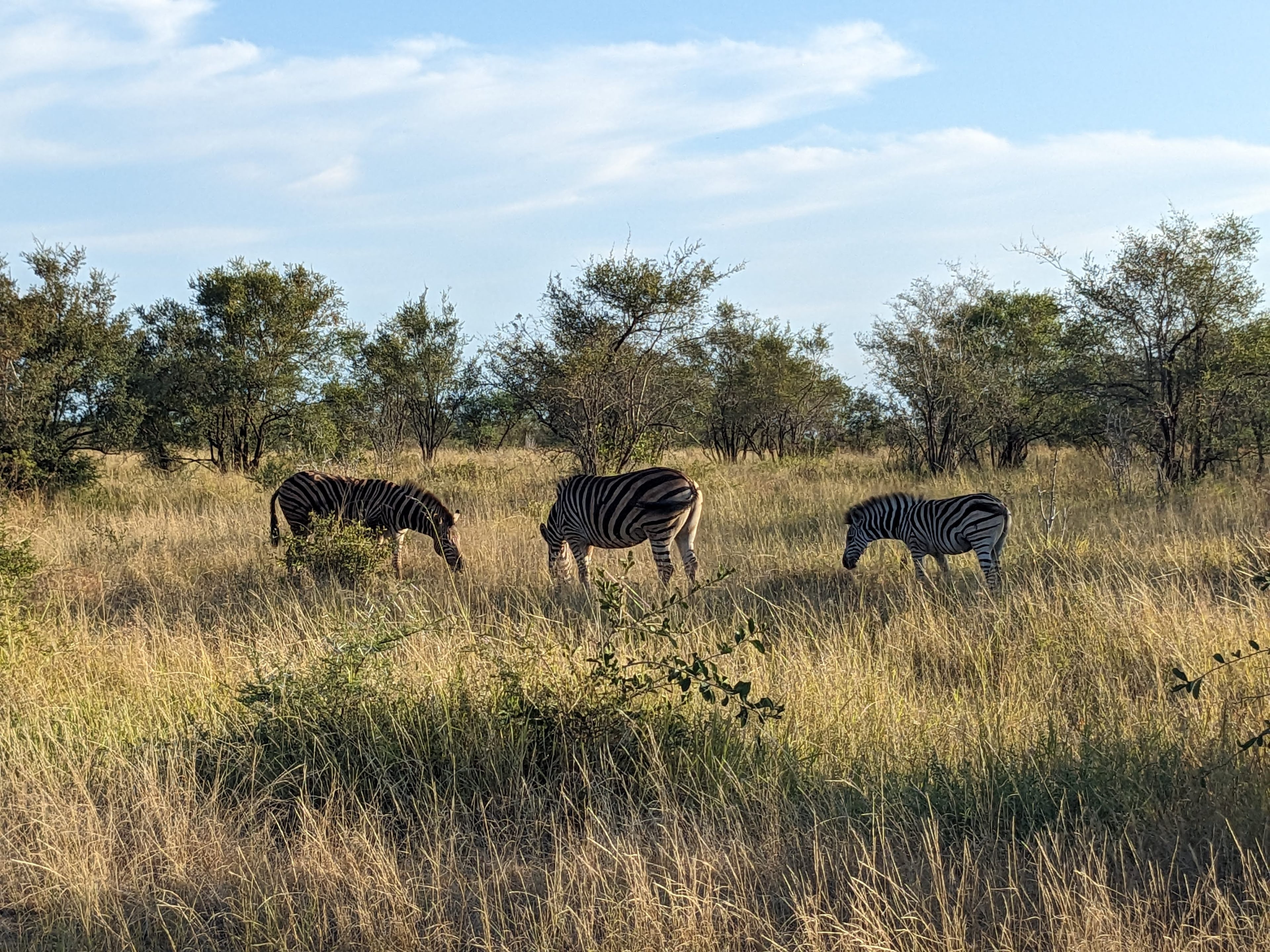
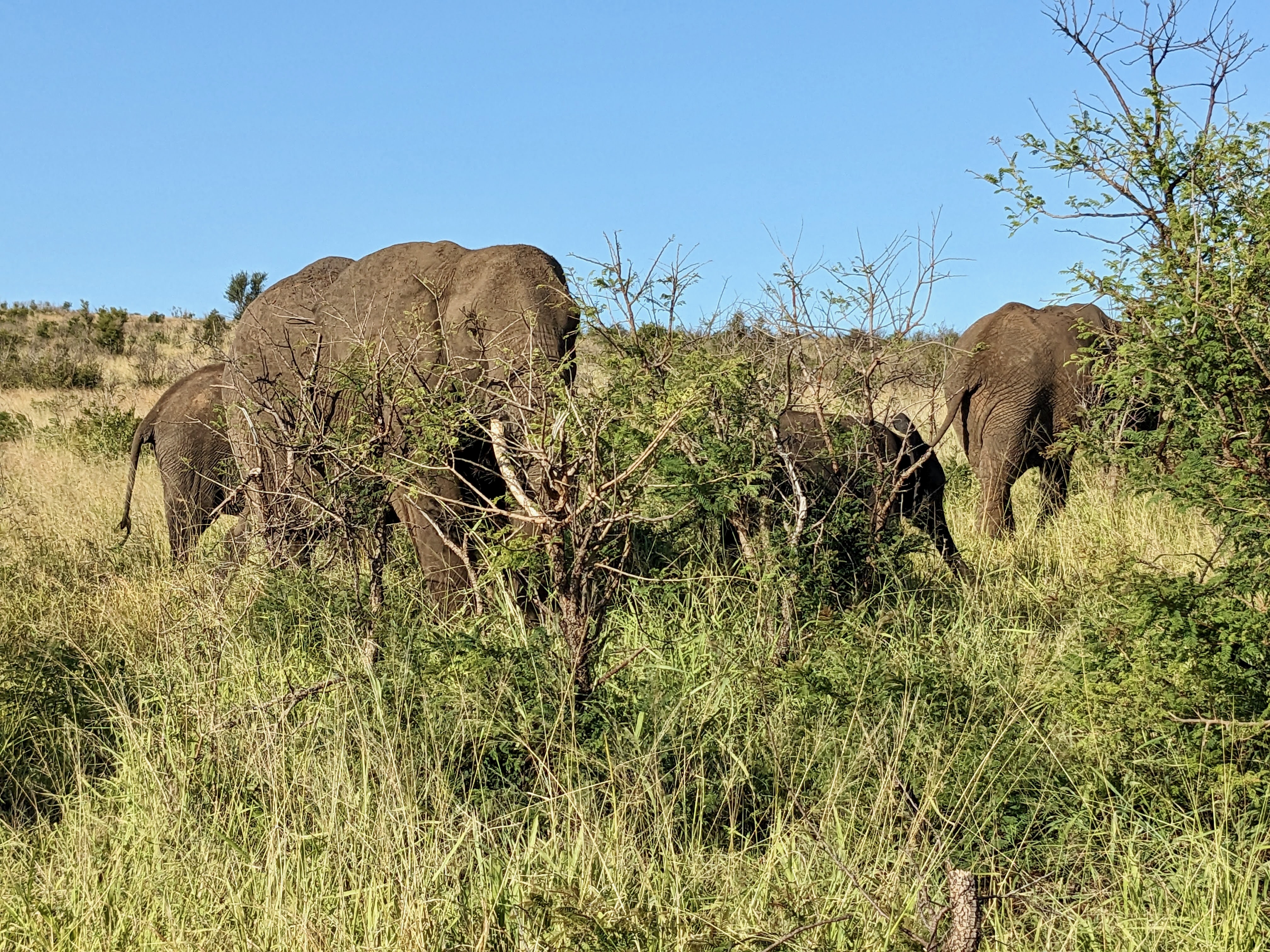
Nothing is as amazing as being two feet away from zeals of zebras, herds of elephants, pairs of lionesses from their pride, living life among them as just another life form.
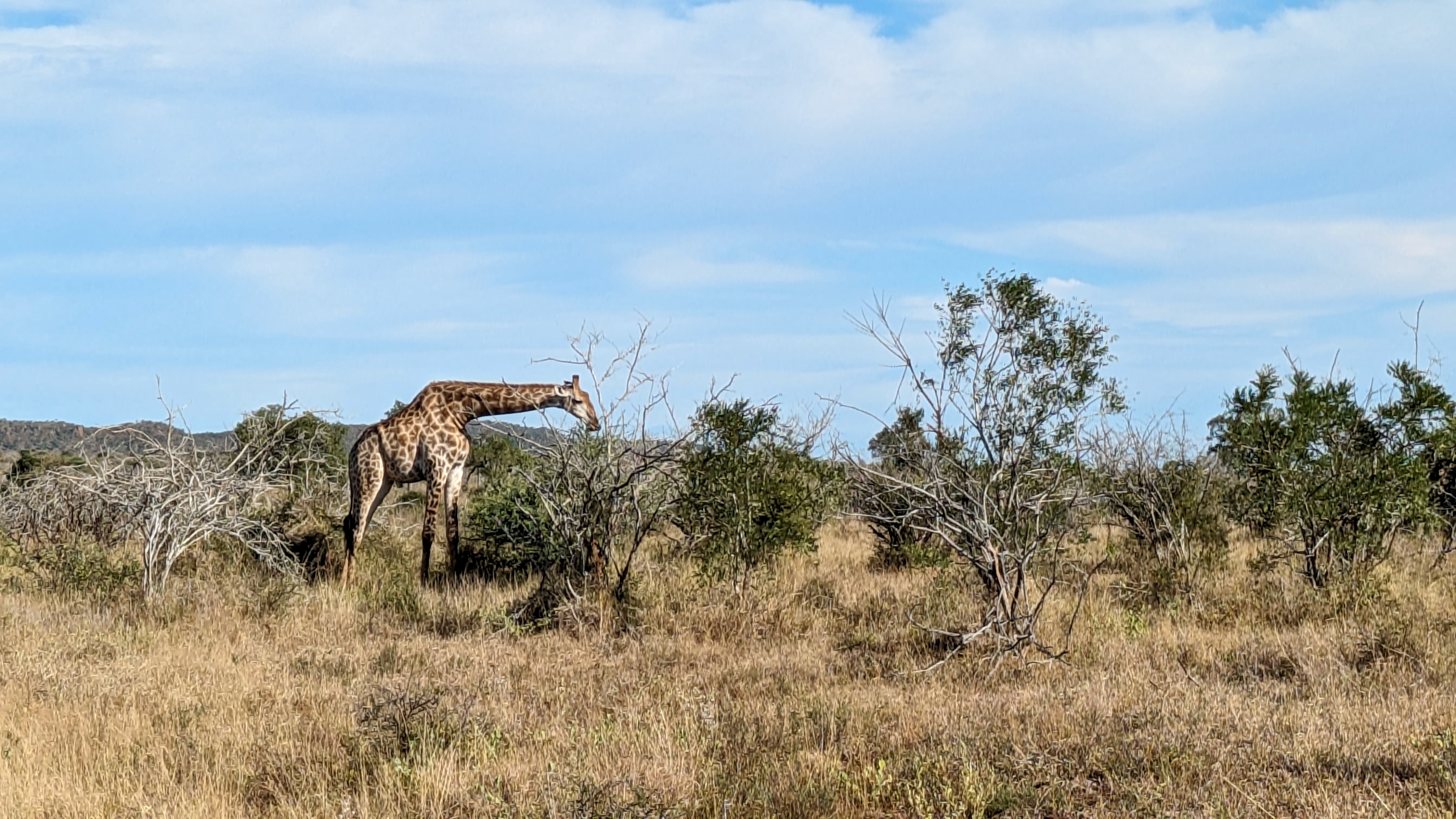
One thing to keep in mind is that: you cannot leave the car when you are driving on your own in the park, you are not even supposed to have your limbs out the window. You might want to plan your drive so that you are always close to a trade stop or a site every now and then for a bathroom stop.
Park tours:
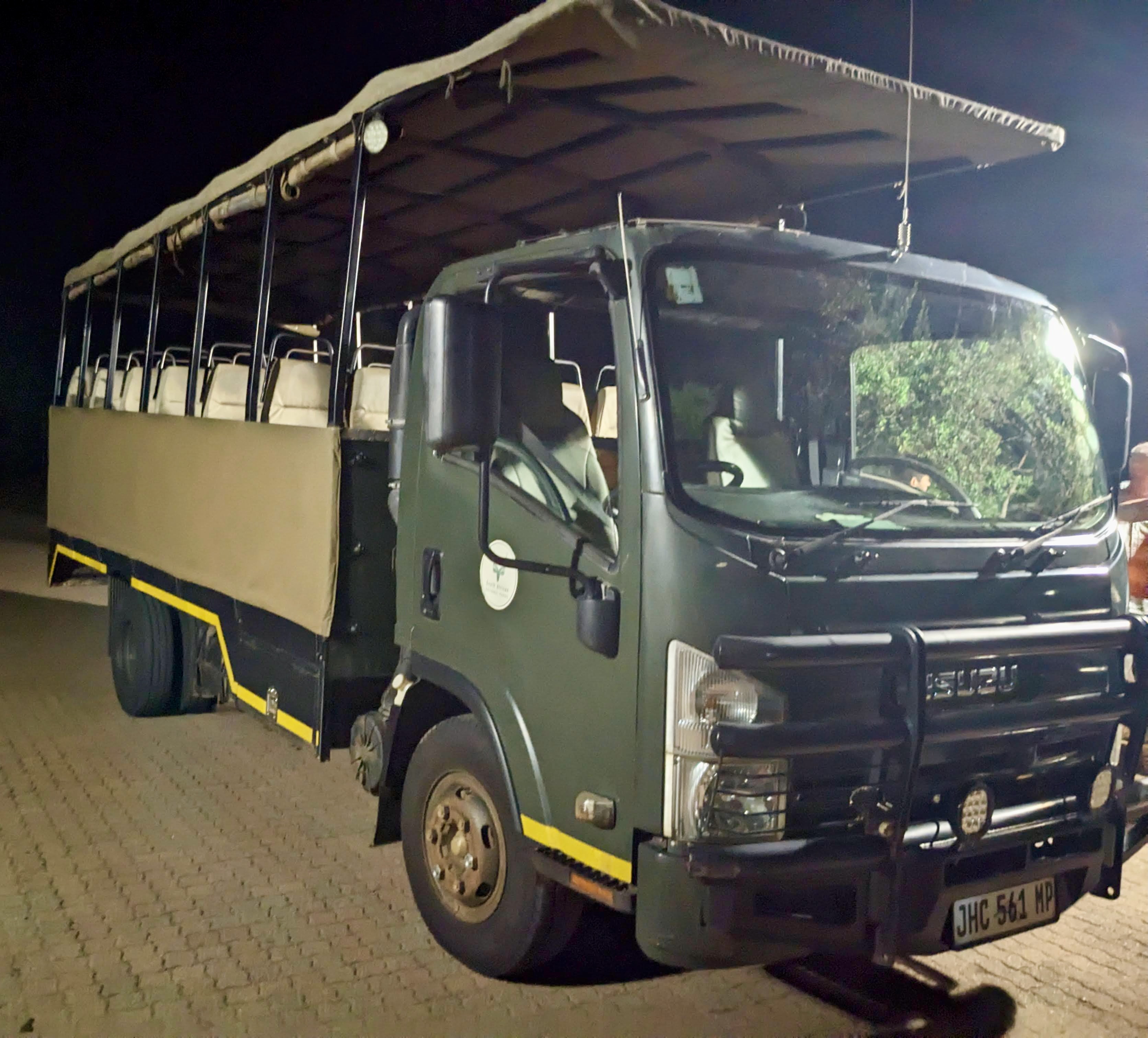
Another way to almost DIY-ing adventures in the park is to join one of the safari park’s activities. Yet another benefit of staying at these lodges is that you can book these activities that leave straight from your lodge accommodation as part of your booking. One might want to select the rest camps based on the types of activities they have available there. Depending on the type of the activity, these walks and drives will cost about $25 - $40 per person per activity.
There are morning and night walks where you join the park rangers and learn about the park, the various animals and insects you see along the path from these life-long caretakers. There are also Sunrise, Sunset and Late Night drives where you get on a safari jeep and get driven around the park for game viewing with the help of these park veterans. We joined both a morning walk and a night drive and found the experience fun and informative. A tip for folks who want to participate in the game viewing on the night drives, don't forget to sit next to the open sides with the hand-held strobe lights ;).
Tips and Conclusion:
Booking everything online was easy and efficient. The SANs park website is easy to navigate and you do get confirmation in the email with everything listed and priced. You can pay with a credit card online when you book or opt to pay at the park (which supposedly also takes credit cards). Having this print-out is handy when you are landing and checking into the park.
The trip should be planned starting with where you want to be in the park, that would help you decide which rest sites you will be staying at. Then you can decide which airport to fly by factoring in how far the drive is to get to the rest area.
I would recommend booking this at least 3 months in advance to ensure there is consecutive availability for the days you are interested in, especially if you are targeting a popular camp and accommodation type.
The self-guided safari tour itself was a very fulfilling and humbling experience being in the park for 4 nights. There’s minimal physical demand and it was very safe to do as a family, as well for seniors and kids.
Cost analysis (in ZAR):
Accommodation, Bungalow: R8,356.20/4 nights
Night drive x 2: R614
Morning walk x 2: R1,374
Sunset Drive x 2: R804
Community fund (1% of booking): R111.48
Park Conservation Fee for Intl: R535 per person per day
Park Accommodation and experience cost: R1,661 ~ $92 per person per day
Car rental: $183 + gas ~ $40 for two per day
Food: <~$10pp a day if you cook and don't eat at the park restaurant every day
A trip of 5 days cost per person per day: $92 + $20 + $10 = $122!
Additional costs to factor in would be the flight costs flying into and out of the park, how nice you want your food and your accommodation to be, the car you want to be driving in, etc. Seriously, not bad though, am I right?